Calculus was born from motion, tangents, areas, and physical prediction. Newton and Leibniz made a language powerful enough to compute planetary motion and optimize curves, but the language of infinitesimals was not yet logically settled. The eighteenth century used it brilliantly; the nineteenth century rebuilt it carefully.
From exhaustion to fluxions
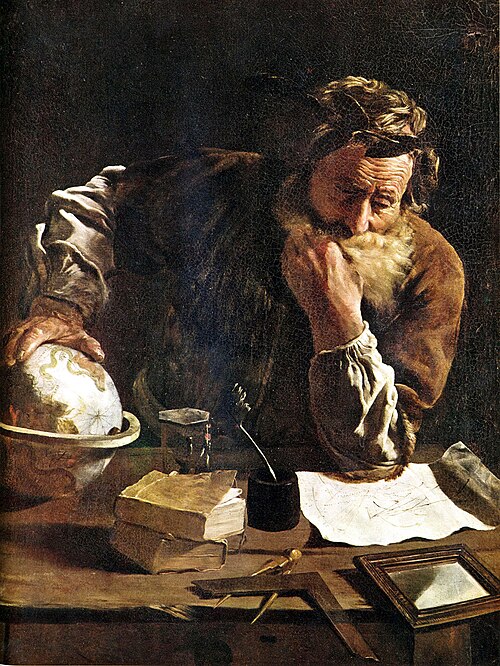
Archimedes had already approximated curved figures by exhaustion: trap the unknown quantity between two sequences of polygonal quantities. Newton's fluxions and Leibniz's differentials made such limiting reasoning mobile. Instead of proving each area separately, one could calculate with \(\mathrm{d}x\), derivatives, and integrals.
Definition. In modern terms, \(f'(a)\) is the limit \[ f'(a)=\lim_{h\to0}\frac{f(a+h)-f(a)}{h}, \] when this limit exists.
Berkeley's objection
George Berkeley famously attacked infinitesimals as quantities treated first as nonzero and then as zero. His criticism did not stop calculus; it exposed a real gap between symbolic success and foundational explanation.
Remark. A method can be mathematically fruitful before its foundations are fully clear. The history of calculus is a lesson in delayed rigor: practice discovered stable patterns first, and foundations later explained why the patterns were trustworthy.
Cauchy and Weierstrass
Cauchy centered analysis on limits, continuity, and convergence. Weierstrass then pushed the language into the epsilon-delta form that avoids vague infinitesimals and makes quantifiers explicit.
Definition. A function \(f\) is continuous at \(a\) if for every \(\varepsilon>0\) there exists \(\delta>0\) such that \( |x-a|<\delta\) implies \( |f(x)-f(a)|<\varepsilon\).
What survived
Theorem. The differential rules of calculus are theorems about limits. For example, if \(f\) and \(g\) are differentiable at \(a\), then \((fg)'(a)=f'(a)g(a)+f(a)g'(a)\).
Rigor did not destroy the old intuition. It made precise which infinitesimal manipulations are valid. In the twentieth century, nonstandard analysis even rebuilt infinitesimals inside a formal model, showing that the old intuition could be rehabilitated once the logic was clear.
The bridge that made calculus a subject
The deepest unification was the fundamental theorem of calculus: accumulation and instantaneous change are inverse operations under suitable hypotheses. In modern notation, if \(F(x)=\int_a^x f(t)\,\mathrm{d}t\) and \(f\) is continuous, then \(F'(x)=f(x)\). Conversely, if \(F'=f\), then \(\int_a^b f(x)\,\mathrm{d}x=F(b)-F(a)\).
This is why calculus became more than a bag of tricks. The same theorem connects geometry of area, physics of velocity, approximation by sums, and algebraic rules for antiderivatives. The later epsilon-delta language did not erase this unity; it gave the unity conditions under which it is true.
From exhaustion to rigorous infinitesimals
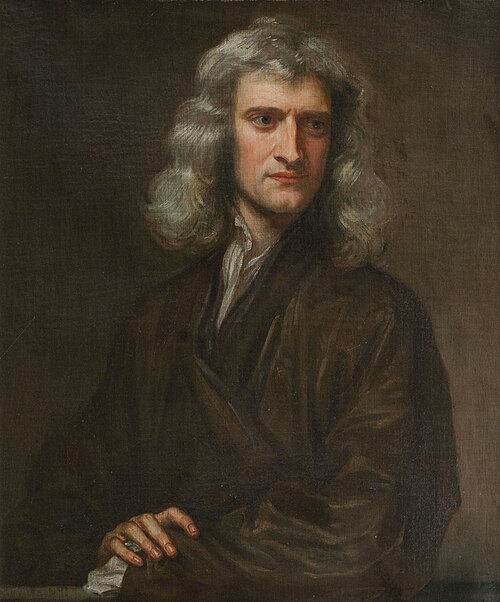
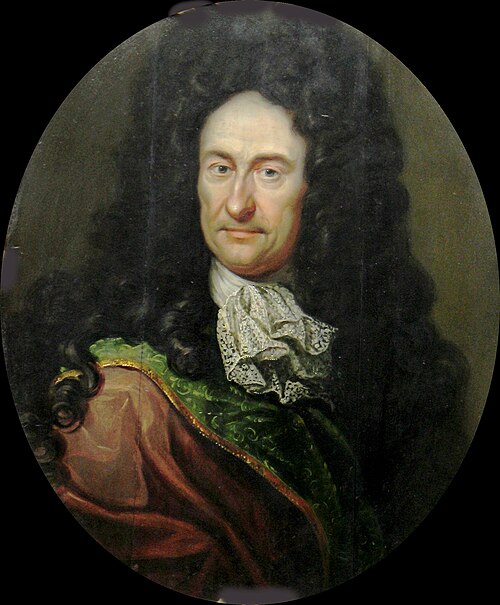
Archimedes represents the ancient art of exhaustion; Newton and Leibniz created the calculus; Euler expanded its power; Berkeley forced the question of rigor; Cauchy, Bolzano, and Weierstrass reshaped analysis through limits; Robinson later gave a rigorous theory of infinitesimals.
Two calculi and one unresolved infinitesimal
Newton's fluxions and Leibniz's differentials solved the same family of problems with different conceptual languages. Newton emphasized quantities flowing in time; Leibniz wrote the symbolic calculus \[ \mathrm{d}(uv)=u\,\mathrm{d}v+v\,\mathrm{d}u \] whose notation proved extraordinarily portable. Neither man possessed the modern real-number foundation that would explain exactly what an infinitesimal was.
Berkeley's 1734 criticism of “ghosts of departed quantities” identified a logical tension: an increment was treated as nonzero while dividing and then as zero while discarding higher-order terms. The criticism did not make the answers wrong. It exposed a gap between a successful computational practice and its justification.
Cauchy, Weierstrass, and quantifier order
Cauchy organized continuity, convergence, and derivative around limits, though his language still carried infinitesimal intuitions. Weierstrass and his school made the dependence of tolerances explicit: \[ \forall\varepsilon>0\ \exists\delta>0\ \forall x,\qquad |x-a|<\delta\Longrightarrow|f(x)-f(a)|<\varepsilon. \] The order of these quantifiers is the rigor. The chosen \(\delta\) may depend on \(\varepsilon\) and the point \(a\), but not on the later choice of \(x\).
Theorem (intermediate value). If \(f:[a,b]\to\mathbb R\) is continuous and \(f(a)<0<f(b)\), then \(f(c)=0\) for some \(c\in(a,b)\).
Dedekind-completeness proof. Let \[ S=\{x\in[a,b]:f(x)\le0\},\qquad c=\sup S. \] If \(f(c)>0\), continuity makes \(f>0\) just to the left of \(c\), contradicting that \(c\) is the least upper bound of \(S\). If \(f(c)<0\), continuity makes \(f<0\) just to the right, contradicting that \(c\) is an upper bound. Therefore \(f(c)=0\).
This proof reveals what the new rigor required beneath calculus: completeness of the real numbers. The arithmetization of analysis and the construction of \(\mathbb R\) were not separate historical ornaments; they closed the logical circuit on which limit arguments depended.
Infinitesimals return with a different foundation
In the twentieth century, Robinson's nonstandard analysis constructed ordered fields containing genuine infinitesimals and proved a transfer principle connecting them to ordinary real analysis. The old intuition was not intrinsically incoherent; what had been missing was a model. History here is not a straight replacement of intuition by formalism, but a cycle in which formal clarity later rehabilitated an earlier idea.